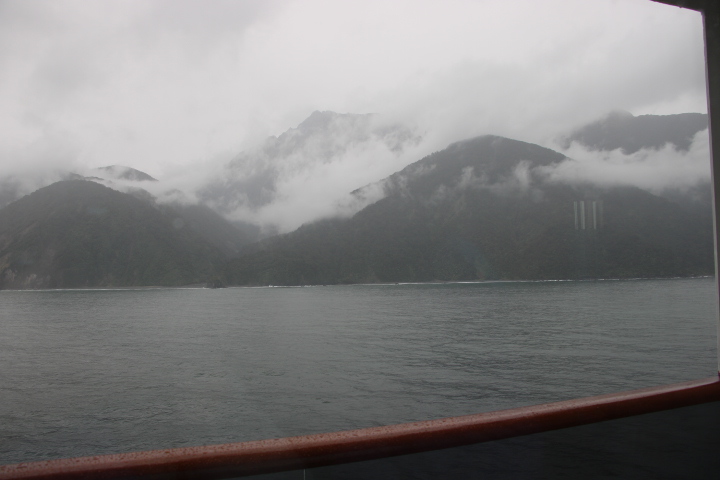
At 08:30 we were off the entrance to Dusky Sound fjord in the southwest of South Island. Here westerly winds are forced to rise over the mountains so rainfall is plentiful and they are covered with temperate ‘rainforest’ of red and mountain beech trees.
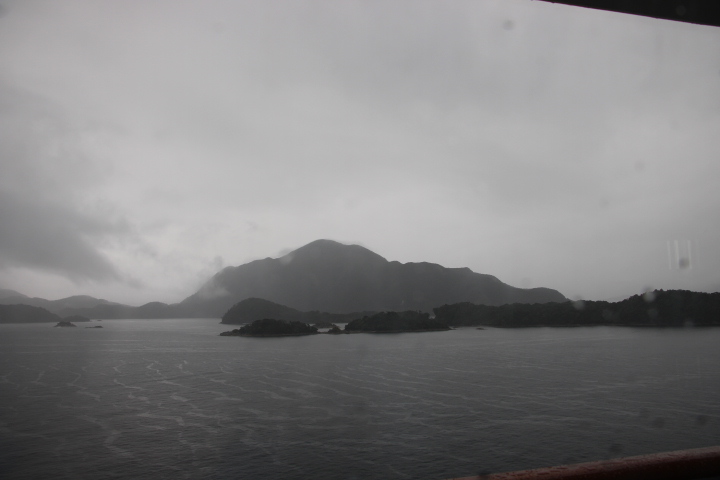


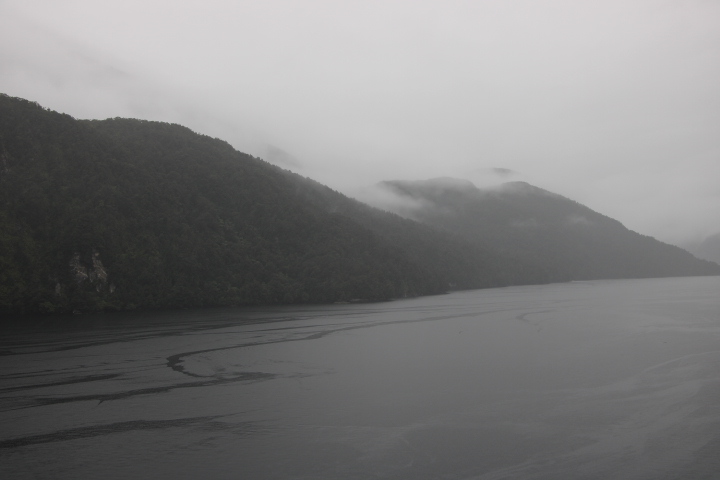
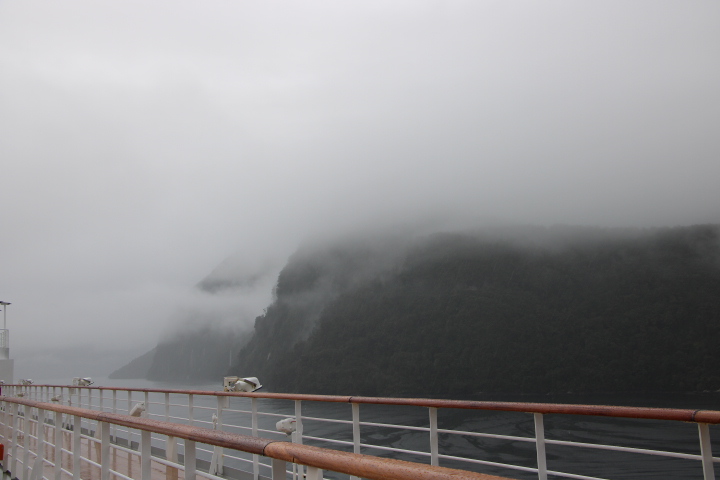
We have left the original landmass of NZ – the breakaway from the ancient continent of Gondwanaland and are now in a sedimentary landscape where wind, rain, sea and ice are the major erosive forces.
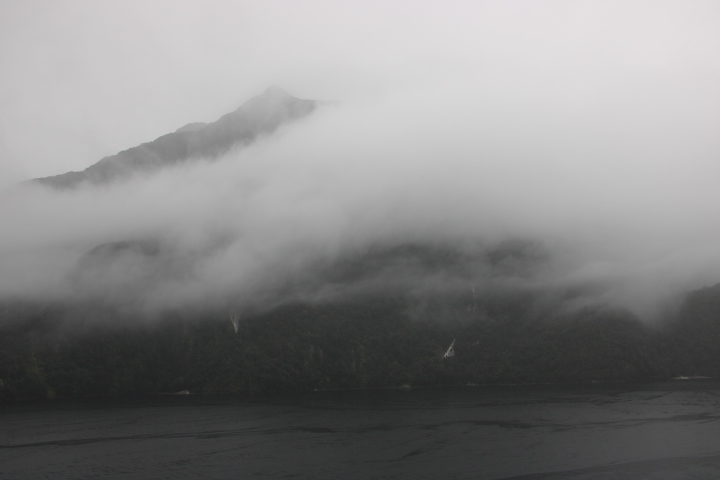


The fjords are the result of glaciers and ice sheets of the last Ice Age (10 million to 2,000 years ago) which many European geographers ignore. We entered Dusky Sound at 09:00 and it lived up to its name (Cook, who named the fjord, had his first sight in the evening). Both Cook and Vancouver, after him, did not linger here as they thought it was not easy to develop economically. European whalers however, saw the regions potential and settled here.
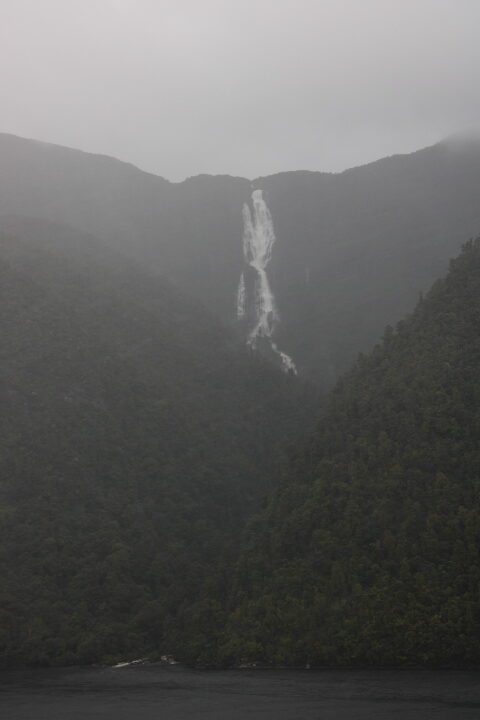
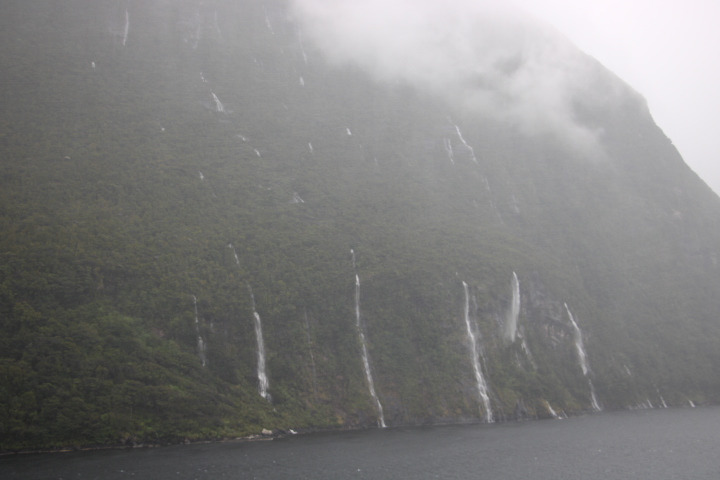
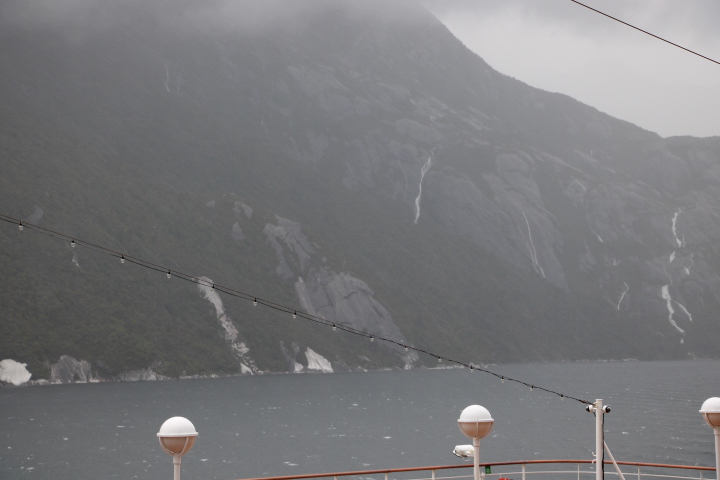
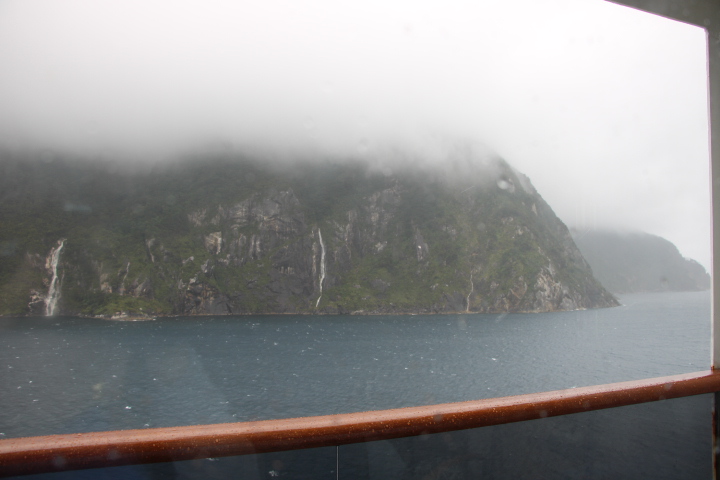
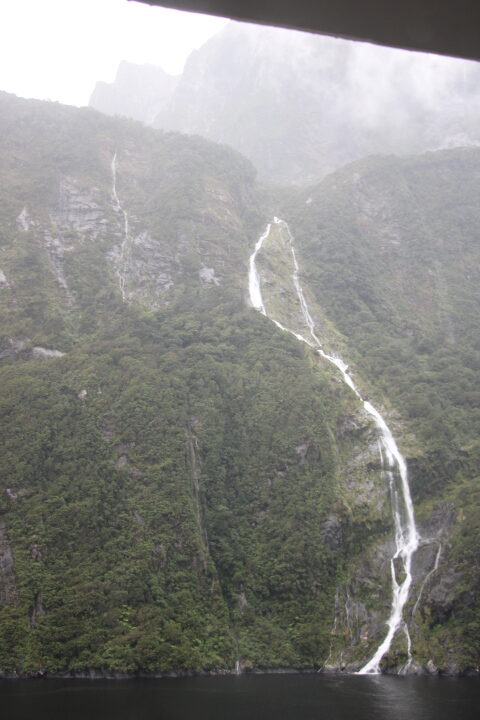
Deeper into the fjord we squeezed alongside Resolution Island and headed north to reach open water. We passed fishermen lifting lobster pots and their contents are exported live to Japan. At lunchtime we entered Doubtful Sound fjord. Here we saw clear evidence of river erosion and uplift that had broken the mountain ranges before the onset of glaciation. We even saw sea arches and stacks from previous and post Ice Age sea erosion. This is much more complicated than the Chilean or Norwegian fjords where the more resistant volcanic rocks have been solely eroded by ice. The proximity of the Alpine Fault means that volcanic activity is always present such as through folding, uplift and downlift and metamorphic rocks lead to a very complicated geology. Upon exiting it was onwards north to Milford Sound fjord which we reached by 17:00. It was named by the first Welsh settlers after the Pembrokeshire town. Here we were surrounded by cliffs of Greenstone (metamorphic shales and clays along with some Dolorite which had been injected during an eruption) from which spectacular waterfalls from the glacial produced hanging valleys. The strong wind blew some of the falls horizontally, especially the highest one, which fell 350m from its source. We also witnessed a rare sight of a 1690m mountain rising straight from sea level. The Captain swung the ship around at the head of the fjord close to the small settlement of Milford, and in doing so we saw how we were surrounded by volcanic plugs and snow still filling the corries at high level.



During dinner we departed westwards for Hobart, Tasmania and re-entered the Tasman Sea. We put the clocks back by one hour from the NZ summertime of +13GMT.