We arrived at Punta Vicente Isabela at 06:00 after an overnight crossing of this part of the Pacific and at midnight the Equator taking us into the Southern Hemisphere.

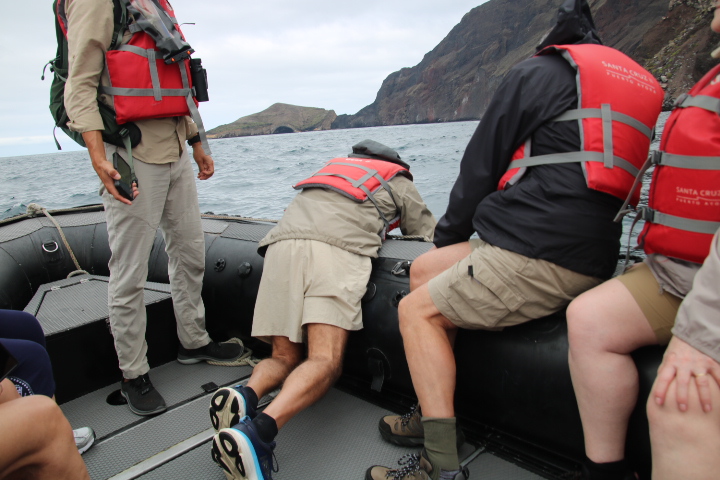
We took a panga (dinghy) cruise along the coastline where we saw the remains, following a destructive collapse of the Volcan Ecuador. A caldera is formed when parts of the volcano collapse or are blown away during the eruption leaving the volcano looking like a broken tooth which is then filled by sea water. The Thera Volcano on the island of Santorini is a great example of a caldera which has a lava dome in the middle which is still active.
There were many sea birds such as Brown Noddy, Lava Gulls, Blue-footed Booby and Flightless Cormorant, Brown Pelican as well as sea lions, Marine Iguanas and sea turtles.


Brown Noddy
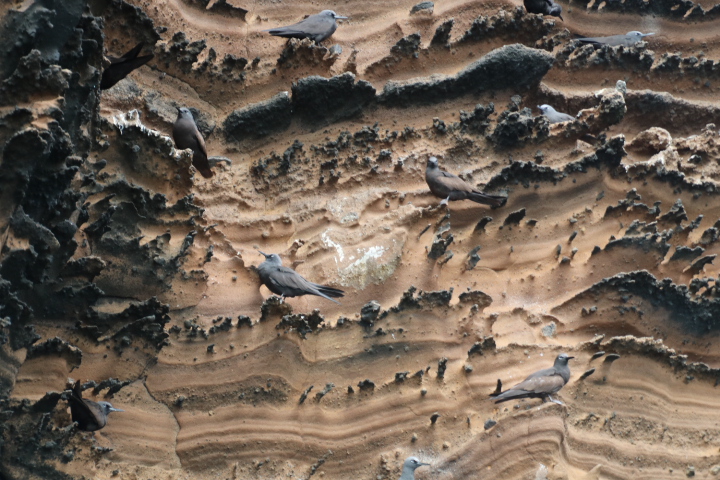
Brown Pelican and Blue-footed Booby

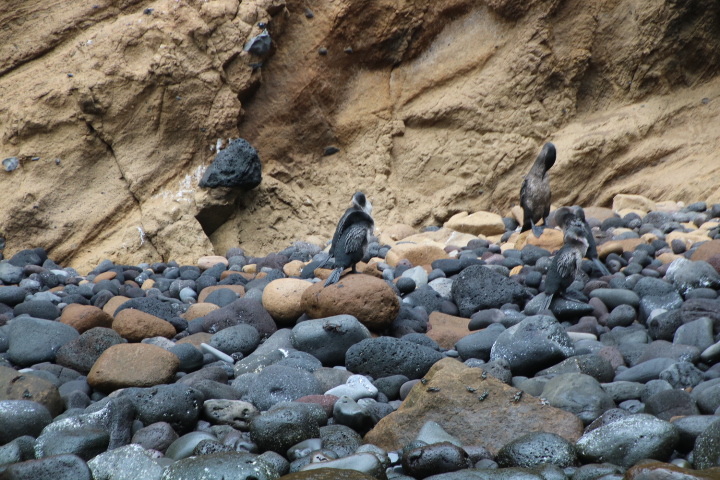
As we returned to the ship our guide conducted a measurement of visibility at depth. This showed that below 5m visibility was zero because of the plankton growth at the junction of the Humbolt and Equatorial currents. This may be good for fish and sea animals but not for our next activity conducted upon a glass bottomed boat. A highlight however, was that we saw more birds including a pair of Noddy terns building a nest.


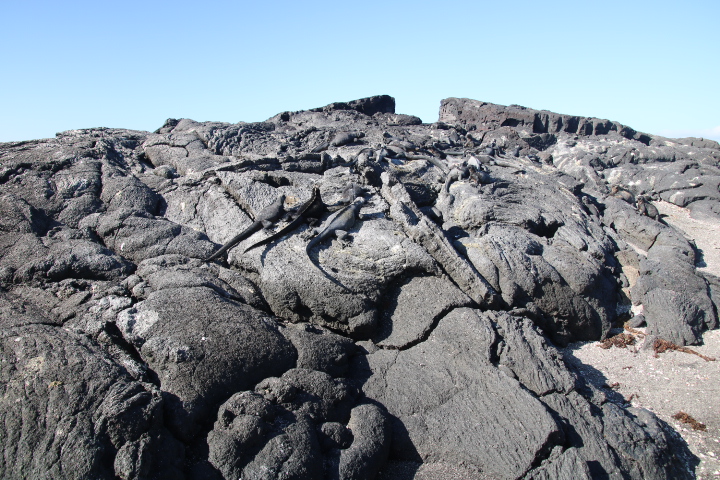
During lunch the ship moved to the north coast of nearby Fernandina Island. It has a very big population of marine iguanas which we hoped to see. Upon landing in the mangroves at the edge of a shallow lagoon we were greeted by a marine iguana.

Red crab

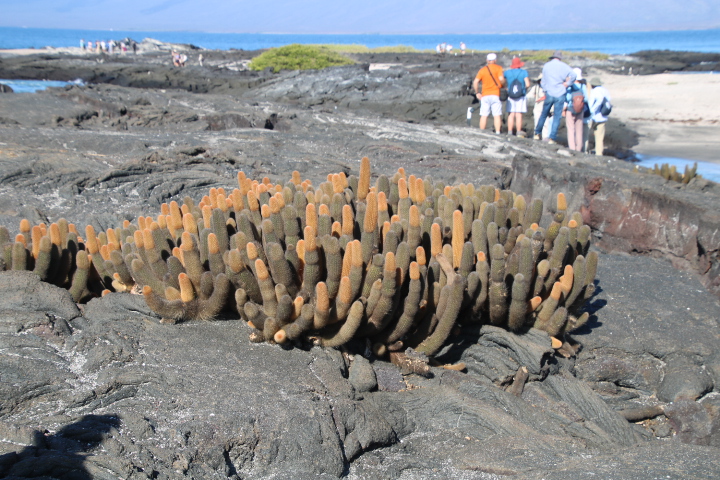
Lava cactus

Lava lizard (female)

Sally Lightfoot crab

Fernandina is a shield volcano like this one on Hawaii. The lava slips over the side and slowly moves to the ocean. Upon contact with the water it suddenly cools and breaks into giant pieces.
We walked across the pahoe-hoe (rope-like) lava field. The lava having spewed down the most active volcano on the island slowly cooled to produce curving rope-like shapes. The lava that reached the ocean was quickly cooled so it is sharper, weaker and a fragmented mass. These sections of the lava field is now a wave-cut platform, covered by the sea at high tide and also with fragments of shells and tiny pebbles.

The marine iguana is an endemic species of which there are 11 subspecies. The only truly marine lizard in the world is common throughout the coastline of the archipelago. Although not truly social they are highly gregarious and gather in colonies resting several animals deep. As they move over soft ground their tails leave a trail.




Some of the highlights were a green sea turtle slowly getting out of the water and up the shelly beach. Lava lizards suddenly shoot in front of you.
